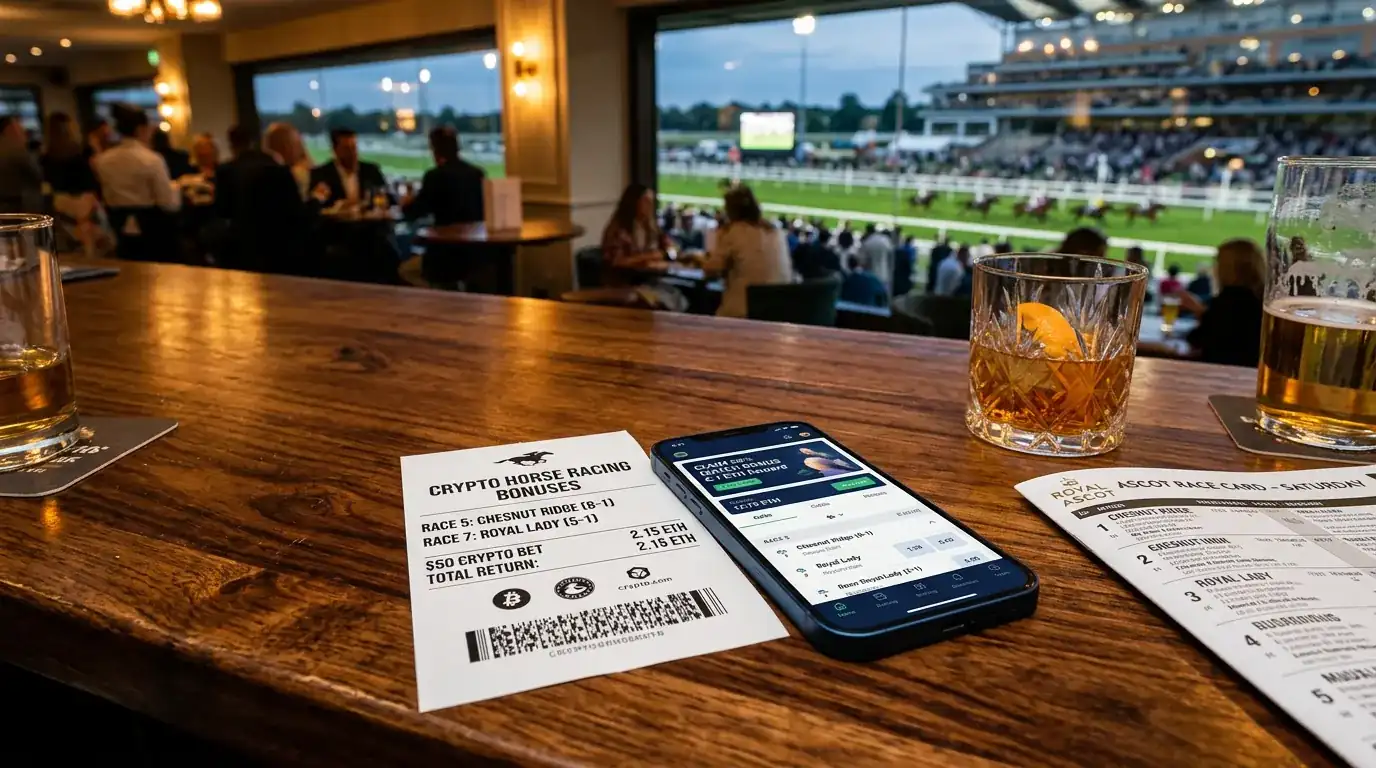
Crypto Horse Racing Betting: The Complete UK Punter’s Guide for 2026
Bet Smarter. Withdraw Faster. Race Ahead.
By UK Racing & Crypto Betting Analyst
 Available in US
Nine years ago, I placed my first crypto bet on a Saturday afternoon handicap at Newmarket. The experience felt almost subversive – funding my account with Bitcoin while my mates were still queuing at betting shop counters, waiting for their bank transfers to clear. Today, that same transaction takes minutes, and crypto horse racing betting has evolved from a niche curiosity into a genuine alternative for UK punters who want faster payouts and more control over their money.
The shift has been dramatic. Sports betting’s share of crypto gambling activity jumped from 3.15% to 14.83% between 2024 and 2025, and horse racing sits at the heart of that growth. British punters, with our deep racing culture and appetite for innovation, are driving much of this change. We’re discovering that blockchain technology solves real problems – the frustration of waiting three to five days for a withdrawal, the friction of rejected deposits, the intrusive affordability checks that can lock you out of your own account at the worst possible moment.
This guide draws on nearly a decade of evaluating crypto sportsbooks, tracking regulatory developments, and placing my own money on everything from the Grand National to midweek cards at Wolverhampton. I’m not here to sell you on a particular platform or convince you that crypto is magic. What I can offer is practical knowledge – how the systems work, where the real advantages lie, what risks you need to manage, and how to navigate a regulatory landscape that’s shifting faster than the odds on a market mover.
Whether you’re holding Bitcoin and curious about putting it to work on the turf, or you’re an experienced punter looking to escape the limitations of traditional bookmakers, this guide covers everything you need to make informed decisions.
Table of Contents
- The Quick Guide for Busy Punters
- Why Cryptocurrency Is Reshaping UK Horse Racing Bets
- The Crypto Gambling Market in 2026: Numbers That Matter
- How Crypto Horse Racing Betting Works
- Cryptocurrencies Accepted at Racing Sportsbooks
- Horse Racing Bet Types Available with Crypto
- Top Crypto Sportsbooks for UK Horse Racing
- UK Regulatory Landscape for Crypto Betting
- Managing Crypto Volatility When Betting
- Crypto vs Traditional UK Bookmakers
- Major UK Racing Events for Crypto Bettors
- Betting Strategies That Work with Crypto
- The Future of Crypto Horse Racing Betting
- Frequently Asked Questions
The Quick Guide for Busy Punters
- Crypto withdrawals take 10–40 minutes versus 1–5 days with traditional bookmakers – the speed advantage alone changes how you can manage your bankroll across multiple meetings.
- Stablecoins like USDT now represent over 70% of crypto betting volume, offering a practical hedge against Bitcoin’s price swings while keeping all the transactional benefits.
- The UK Gambling Commission doesn’t license crypto-only sportsbooks, meaning you’ll use offshore platforms – understand the trade-offs in consumer protection before you deposit.
- UK racing generates £4.1 billion annually for the economy, but betting turnover has dropped 12.8% since 2023 – crypto platforms aren’t subject to the Horserace Betting Levy that supports this ecosystem.
- Mobile betting will account for 80% of all crypto gambling activity by year’s end, making platform mobile experience a critical evaluation factor.
Why Cryptocurrency Is Reshaping UK Horse Racing Bets
Last October, I backed a 16/1 shot at Cheltenham who romped home by three lengths. Brilliant result – except my traditional bookmaker account was frozen for an affordability review. The money sat there for eleven days while I answered questions about my income. By then, I’d missed the entire November meeting at the course. That experience crystallised why so many punters are moving to crypto: control over your own funds isn’t a luxury, it’s fundamental.

The UK gambling industry generated £16.8 billion in gross gambling yield last year, growing 7.3% year-on-year. That’s a mature, well-established market. Yet the underlying infrastructure remains frustratingly slow. Bank transfers still take one to five business days. E-wallets add another layer of fees. Credit cards are banned entirely for gambling. Cryptocurrency sidesteps all of this – Bitcoin transactions typically confirm in 10–40 minutes depending on network load, while Litecoin clears in roughly 2.5 minutes with minimal fees.
The speed matters more than you might think. Racing is a game of opportunity. When you spot value in the early morning markets, you need funds available now, not tomorrow. When you want to compound a winning day by reinvesting your returns, waiting for withdrawal processing kills the momentum. Andrew Rhodes, CEO of the UK Gambling Commission, recently acknowledged that crypto presents an accelerating challenge: “What I considered a five-year problem, perhaps a year or two ago, has now become an 18-month to two-year challenge.”
| Feature | Crypto Betting | Traditional Betting |
|---|---|---|
| Deposit Speed | 10–40 minutes (BTC) / 2.5 minutes (LTC) | Instant (debit card) / 1–3 days (bank transfer) |
| Withdrawal Speed | 10–40 minutes typically | 1–5 business days |
| Transaction Fees | Network fees only (variable) | Often absorbed by bookmaker |
| Affordability Checks | Minimal or none | Mandatory and intrusive |
| UK Licensing | Not available (offshore only) | UKGC regulated |
| Consumer Protection | Limited recourse | Full UKGC dispute resolution |
Note: The speed advantage of crypto cuts both ways. Faster deposits mean faster access to gambling, which requires stronger personal discipline. Set firm limits before you fund your account, not after.
Beyond speed, crypto offers genuine privacy benefits. You’re not sharing banking details with offshore operators. Your gambling transactions don’t appear on bank statements that might be reviewed by mortgage lenders or employers. For many punters, this discretion isn’t about hiding a problem – it’s about maintaining appropriate boundaries between their personal finances and their recreational betting.
The Crypto Gambling Market in 2026: Numbers That Matter
Five years ago, crypto gambling was a rounding error – roughly $50 million globally in 2019. Now the market is projected to exceed $65 billion by the end of this year, with a compound annual growth rate hovering between 12–15%. That’s not gradual adoption; that’s a fundamental shift in how a significant portion of the betting public wants to transact.
The Q1 figures from earlier this year tell the story clearly: total wagering volume at crypto casinos and sportsbooks hit $26 billion – nearly double the same period last year. The growth from $250 million in 2024 to these figures represents something more than a trend. It reflects genuine dissatisfaction with traditional banking infrastructure and growing confidence in blockchain as a payments layer.
Within the UK specifically, the picture is more nuanced. Around 15% of British consumers with online gambling accounts express interest in betting with cryptocurrency, with 5% being very interested. That might sound modest, but consider the demographics: 54% of potential crypto bettors fall within the 18–34 age bracket, compared to just 37% of traditional online gamblers. The Gambling Commission’s CEO has noted that “the growth of cryptocurrency amongst younger demographics means there is growing pressure in the system.” This isn’t a passing fad – it’s generational change working its way through the market.
London punters are twice as likely to bet with crypto as the national average. Nearly 29% of UK crypto gambling interest concentrates in the capital, versus just 15% of overall online betting activity.
The geographic concentration matters for racing specifically. London-area courses like Sandown, Kempton, and Ascot draw heavily from this tech-savvy demographic. When I attend meetings at these tracks, the conversations in the bars have shifted. Five years ago, nobody mentioned Bitcoin. Now it’s common to overhear punters discussing which platforms offer the best racing coverage and whether USDT is better than Bitcoin for managing volatility during the festival season.
The sports betting segment within crypto gambling has been the fastest-growing category, expanding from just 3.15% to 14.83% of total volume between 2024 and 2025. Horse racing benefits directly from this shift because it offers something other sports can’t match: continuous action throughout the day, every day of the week, across multiple countries. That makes it perfectly suited to punters who want to deploy their crypto actively rather than letting it sit idle.
How Crypto Horse Racing Betting Works
The mechanics are simpler than most newcomers expect. I’ve introduced dozens of friends to crypto betting over the years, and the learning curve typically takes one afternoon – not weeks of technical education. The process breaks down into three stages: selecting and evaluating a platform, funding your account, and placing your bets. Each has specific considerations that differ from traditional bookmaker experiences.
Choosing a Platform
Platform selection is where most punters go wrong. They chase the biggest welcome bonus without checking whether the sportsbook actually covers UK racing in any depth. I’ve seen operators advertise horse racing only to discover they offer three meetings a day from American tracks while ignoring the entire British and Irish racing calendar.
Start by assessing racing coverage. A proper racing sportsbook should cover every UK meeting, offer markets beyond simple win betting, and display competitive odds that move in response to market conditions. Check whether they offer each-way terms, forecast and tricast bets, and ante-post markets for major festivals. These aren’t nice-to-haves – they’re baseline requirements for serious racing punters.
Racing Coverage
All UK and Irish meetings, plus major international fixtures
Bet Types
Win, place, each-way, forecast, tricast, and multiple bet builders
Odds Display
Fractional format option (essential for UK racing)
Live Streaming
Coverage of races you can bet on without separate subscriptions
Licensing matters, though not in the way traditional bookmaker advertising suggests. No crypto-only sportsbook holds a UK Gambling Commission licence – that option simply doesn’t exist. Most operate under Curaçao, Malta, or similar jurisdictions. What you’re evaluating isn’t whether they have a UK licence (they won’t), but whether they have established operational history, responsive customer support, and a track record of actually paying out winners.
Funding Your Account
Once you’ve selected a platform, you’ll need to transfer cryptocurrency from your personal wallet. The platform will provide a unique deposit address – a long string of characters that identifies your account on their system. Copy this address exactly, then initiate a transfer from your wallet for the amount you wish to deposit.
Confirmation times vary by cryptocurrency. Bitcoin typically takes 10–40 minutes as the network processes your transaction through multiple confirmations. Litecoin clears in roughly 2.5 minutes. Stablecoins like USDT depend on which blockchain they’re using – the Tron network version (TRC-20) is fastest, while Ethereum-based USDT (ERC-20) can take longer and costs more in fees. Most platforms credit your balance after one to three network confirmations.
Never deposit more than you’re prepared to lose in a single session. This isn’t just responsible gambling advice – it’s practical risk management for crypto specifically. Funds deposited to offshore platforms are outside UK protections. Treat each deposit as money that’s left your control until you successfully withdraw it back to your own wallet.
Placing Your First Bet
With funds credited, the betting experience largely mirrors traditional bookmakers. Navigate to horse racing, select your meeting and race, review the odds, and add selections to your bet slip. The key difference is your balance displays in cryptocurrency rather than pounds. Some platforms offer the option to set a GBP equivalent display, which I’d recommend initially while you develop intuition for stake sizing in crypto terms.
Pay attention to odds movement patterns. Crypto sportsbooks often react more slowly to market moves than established UK bookmakers because they’re drawing less liquidity. This can work for you – early value that gets crushed on traditional sites sometimes persists longer on crypto platforms. It can also work against you if you’re backing steamers that have already been identified by sharper money elsewhere.
Pre-Race Verification Steps
- Check official going report and any course inspection updates
- Review confirmed jockey bookings for late changes
- Compare platform odds against UK exchange and bookmaker prices
- Verify your stake in both crypto and GBP equivalent terms
- Confirm bet type matches your intention (win vs. each-way)
Cryptocurrencies Accepted at Racing Sportsbooks
The question I hear most from punters considering the switch isn’t “which platform” – it’s “which coin?” The answer has shifted dramatically over the past two years. Bitcoin once dominated crypto gambling with an 88% market share. That figure has dropped to 77% in 2025 as punters discover practical advantages in alternative cryptocurrencies. Stablecoins alone are projected to handle over 70% of all crypto betting volume by year’s end.
BlackRock’s Samara Cohen captured this evolution perfectly: “Stablecoins are no longer niche and are becoming a bridge between traditional finance and digital liquidity.” For betting purposes, that bridge matters. When you’re trying to assess your actual bankroll position, having your balance swing 10% overnight because Bitcoin moved isn’t helpful. Stablecoins give you the transactional benefits of crypto without the rollercoaster.
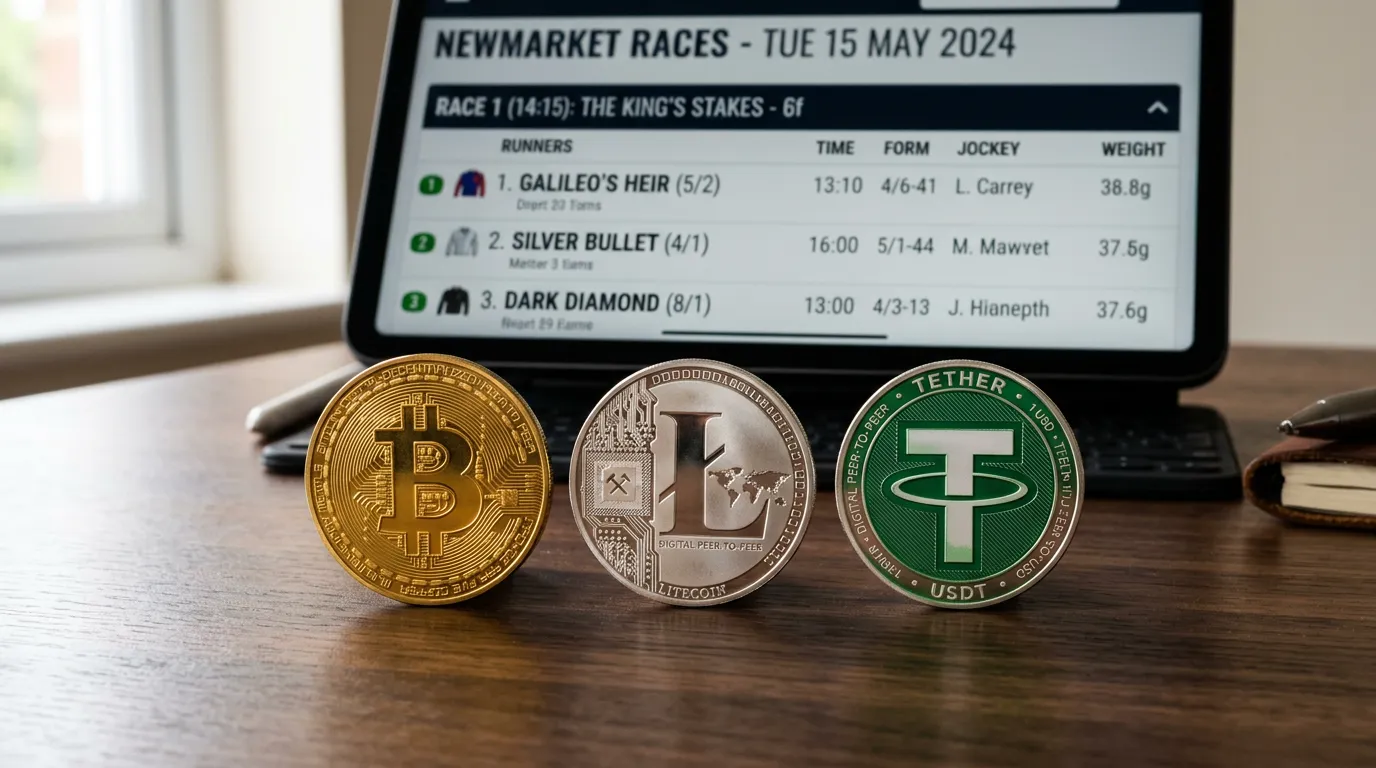
| Cryptocurrency | Transaction Speed | Typical Fee | Price Stability | Best For |
|---|---|---|---|---|
| Bitcoin (BTC) | 10–40 minutes | £2–15 variable | Highly volatile | Long-term holders, large transactions |
| Ethereum (ETH) | 5–15 minutes | £1–20 variable | Volatile | DeFi users, smart contract features |
| USDT (Tether) | 1–5 minutes (TRC-20) | Under £1 | Pegged to USD | Bankroll stability, frequent betting |
| Litecoin (LTC) | 2.5 minutes | Under £0.10 | Moderate volatility | Fast deposits, low-fee transactions |
My own approach has evolved toward a split strategy. I keep my main betting bankroll in USDT to avoid the mental gymnastics of converting volatile crypto prices into stake decisions. When I’m winning, I occasionally move profits into Bitcoin as a form of forced savings – letting the volatility work for potential upside rather than complicating my active betting account. It’s not a system for everyone, but it addresses the core tension between wanting crypto benefits and needing bankroll clarity.
Litecoin deserves more attention than it typically receives. The 2.5-minute confirmation time makes it ideal for funding your account when a betting opportunity is time-sensitive. I’ve used it repeatedly for ante-post markets where prices are moving quickly – by the time a Bitcoin transaction confirms, the value can disappear. Litecoin fees are negligible, often under 10p regardless of transaction size, making it economical for smaller deposits.
Ethereum has fallen somewhat out of favour for pure betting transactions due to unpredictable gas fees. During network congestion, a simple transfer can cost £20 or more. Unless you’re specifically interested in Ethereum-based DeFi integrations or NFT features that some newer platforms are exploring, Litecoin or stablecoins typically make more sense for racing punters.
For detailed guidance on getting your money in and out efficiently, I’ve covered the practical mechanics in depth in our Bitcoin deposits and withdrawals guide.
Horse Racing Bet Types Available with Crypto
A punter I know from Newmarket refuses to use crypto platforms because, in his words, “they don’t understand racing betting.” He’s half right – some don’t. But the better operators now offer the full range of bet types that serious racing punters expect, from simple win bets through complex multiples and exotic wagers.
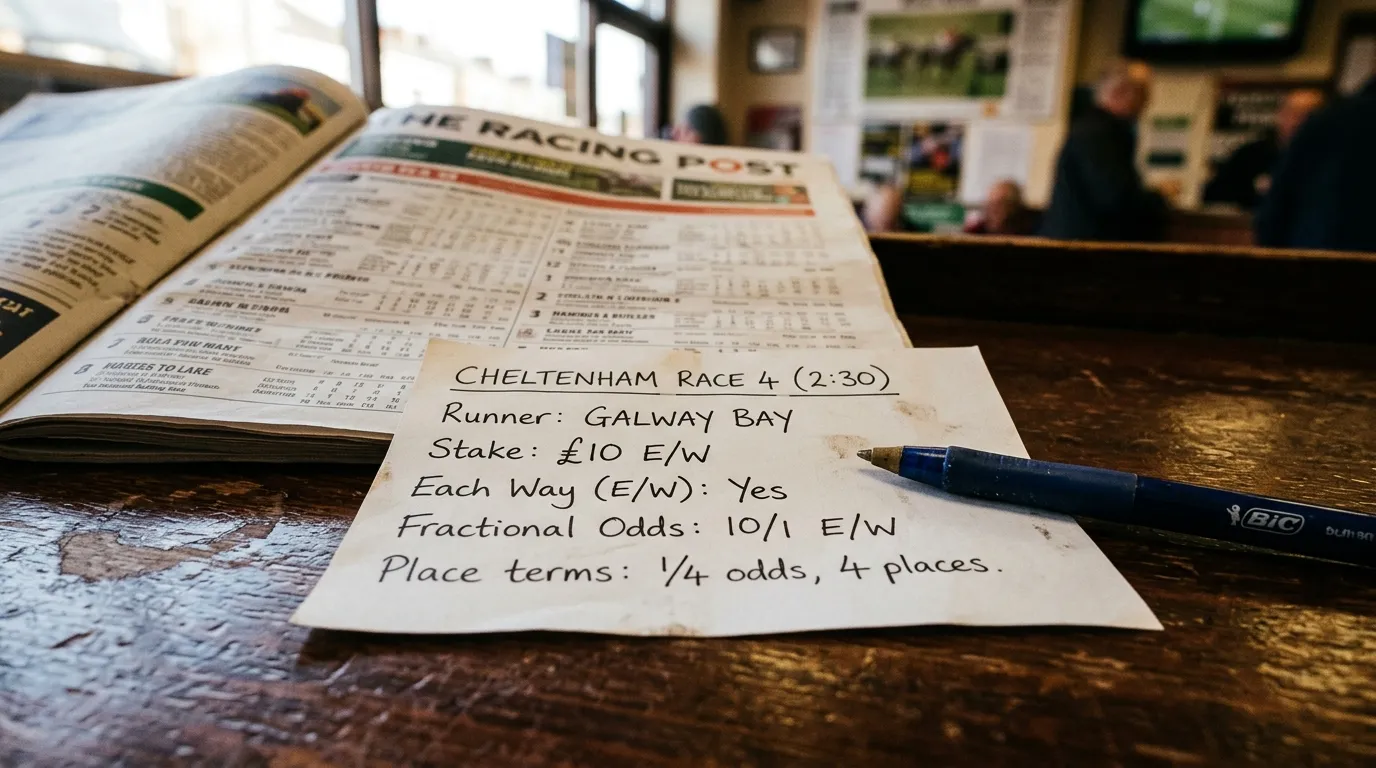
The straight bets form your foundation: win (your selection finishes first), place (finishes in the places, typically top two to four depending on field size), and each-way (a combination bet covering both win and place). Each-way betting is where many crypto platforms initially fell short, either not offering it or applying unfavourable terms. The situation has improved considerably – most established crypto sportsbooks now match or come close to the quarter odds, 1-2-3-4 place terms you’d find at UK bookmakers for larger fields.
Understanding Each-Way Terms
Your selection is offered at 10/1 in a 16-runner handicap. Each-way terms are 1/4 odds for places 1-2-3-4. You stake £10 each-way (£20 total outlay).
Each-Way Bet Calculation
If your horse wins at 10/1:
Win portion: £10 x 10 = £100 profit + £10 stake returned = £110
Place portion: £10 x 2.5 (quarter of 10/1) = £25 profit + £10 stake returned = £35
Total return: £145 from £20 stake
If your horse places but doesn’t win:
Win portion: £10 lost
Place portion: £25 profit + £10 stake = £35
Total return: £35 from £20 stake (£15 profit)
Exotic bets – exactas, trifectas, and beyond – require your selections to finish in precise order. Not all crypto platforms support these markets, which is worth checking if you’re a forecast enthusiast. When they do offer them, the minimum stakes tend to be lower than traditional bookmakers, making it economical to cover permutations on longer-priced runners.
Multiple bets and accumulators function identically to their traditional counterparts. Doubles, trebles, Yankees, Lucky 15s – the full menu of combination bets translates directly. The only difference is settlement currency. When your four-fold lands, your returns credit in crypto at the odds you took, regardless of how the crypto price has moved since you placed the bet.
Ante-post betting deserves special mention. Major festivals like Cheltenham, the Grand National meeting, and Royal Ascot generate months of ante-post activity, and crypto platforms have embraced this market. The absence of withdrawal friction works particularly well for ante-post punting – you can take an early price, withdraw your profits from another bet to fund it, and be positioned without leaving money sitting dormant in your account.
For a comprehensive breakdown of every bet type and how to apply them effectively, I’ve written a dedicated guide to horse racing bet types with crypto.
Top Crypto Sportsbooks for UK Horse Racing
Wading through the crypto sportsbook landscape feels a bit like assessing runners in a competitive handicap – past form matters, but conditions on the day can vary. Platforms that performed well last year may have changed ownership, altered their terms, or let their racing coverage slip. I revisit and reassess continuously because the sector moves quickly.
What separates adequate platforms from genuinely good ones for racing punters comes down to three factors: coverage depth, odds competitiveness, and operational reliability. Coverage means every UK and Irish meeting, not just the premium cards. Odds competitiveness requires regular comparison against traditional bookmakers and exchanges – a platform that consistently trails by two or three points in the betting isn’t giving you value regardless of other features. Operational reliability means withdrawals process promptly without arbitrary delays or sudden account reviews.
Coverage Depth
UK, Irish, French, and major international meetings with full market depth
Odds Quality
Within 2% of exchange prices on principal markets
Withdrawal Speed
Processed within 24 hours, credited within network confirmation times
The established operators in this space have been serving UK punters for several years now. They accept multiple cryptocurrencies, offer reasonable each-way terms, and have demonstrated they actually pay out winning accounts. Newer entrants regularly appear with flashy welcome bonuses, but until they’ve weathered a major festival season – with its surge of action and inevitable large payouts – they remain unproven.
One pattern I’ve noticed: platforms that perform well on football often underwhelm on racing. The skill sets required to price competitive racing markets differ significantly from football. Racing demands constant odds updates throughout the day across dozens of meetings, deep form knowledge to set sensible prices on handicaps, and the operational capacity to accept significant ante-post liabilities months before an event. Not every sportsbook invests in these capabilities.
I maintain detailed assessments of the platforms worth considering in our crypto sportsbooks for horse racing review, updated regularly as the landscape evolves.
UK Regulatory Landscape for Crypto Betting
Here’s the uncomfortable truth that most crypto betting guides skip over: every platform you’ll use operates outside UK jurisdiction, and that has real implications for your rights as a punter. The UK Gambling Commission doesn’t licence crypto-native sportsbooks. Full stop. When you deposit Bitcoin to bet on the 3:15 at Haydock, you’re entrusting your money to an operator the British regulator has no authority over.
The government collected £3,616 million in betting and gaming duties last financial year, representing 7% growth year-on-year. That revenue stream comes from licensed operators who’ve agreed to UK oversight. Crypto platforms don’t contribute to this, don’t fund the Horserace Betting Levy that supports British racing, and don’t answer to the same enforcement mechanisms. The Gambling Commission CEO has been blunt about the enforcement posture: “There will be no warnings. We have conducted nine suspensions in the past few weeks, and all of them concern issues we have repeatedly warned about.” That intensity doesn’t extend to offshore crypto operators simply because they’re outside jurisdiction.
Note: Using offshore crypto sportsbooks isn’t illegal for UK punters. The Gambling Act 2005 doesn’t criminalise individual bettors for using unlicensed sites. The legal exposure falls on operators targeting UK customers without a licence, not on customers themselves.
What you give up by going offshore is significant. UKGC-licensed bookmakers must segregate customer funds, maintain dispute resolution processes, implement responsible gambling tools, and meet ongoing capital requirements. They can have their licences revoked for poor behaviour. Offshore platforms make their own rules, and your recourse if something goes wrong is limited to hoping they value their reputation enough to resolve your issue voluntarily.
The uncertainty cuts deeper than individual platform risk. An industry CEO captured the broader mood earlier this year: “The biggest worry is political, legal, and regulatory uncertainty. The betting sector faces repeated and often disproportionate political attention, which fuels volatility and an unpredictable tax environment.” That instability affects how operators plan, price, and ultimately treat their customers.
Warning: Some crypto platforms market aggressively to UK punters while having minimal infrastructure to actually serve them properly. Verify that a platform explicitly accepts UK customers, offers sensible GBP conversion tools, and has demonstrated a history of paying UK-based winners before depositing significant funds.
Tax implications for UK punters betting with crypto mirror those for traditional betting – gambling winnings are not taxable in the UK for recreational bettors. However, if you’re trading cryptocurrency actively and your betting forms part of that activity, or if you’re treating gambling as a profession, the picture becomes more complicated. The conversion of crypto winnings to fiat currency may trigger capital gains considerations separate from the gambling itself.
For comprehensive coverage of the regulatory framework and its practical implications, see our detailed UK crypto betting regulations guide.
Managing Crypto Volatility When Betting
The most expensive lesson I learned in crypto betting had nothing to do with picking losers. I deposited £500 worth of Bitcoin before the 2022 Cheltenham Festival, caught a few winners, and by Gold Cup day my account showed 0.025 BTC – roughly equivalent to £800 at the exchange rate when I deposited. Perfect week, or so I thought. By the time I withdrew the following Monday, Bitcoin had dropped 15%. My “£800” converted to £680. A winning festival produced a losing week in real terms.
This volatility problem is solvable, but it requires deliberate planning. The shift toward stablecoins – now projected to represent over 70% of crypto betting volume – reflects the market learning this lesson collectively. When your betting bankroll is denominated in USDT or USDC, your balance maintains a near-constant relationship with dollars (and by extension, pounds). A £500 deposit stays worth roughly £500 regardless of what Bitcoin does overnight.
Volatility Impact Scenario
You deposit £1,000 in Bitcoin at a rate of £40,000 per BTC (0.025 BTC).
After a successful betting day, your balance shows 0.03 BTC (£1,200 at deposit rate).
Scenario A – Bitcoin rises 10% to £44,000: Your 0.03 BTC is now worth £1,320 (£120 bonus on top of betting profits).
Scenario B – Bitcoin falls 10% to £36,000: Your 0.03 BTC is now worth £1,080 (erasing most of your betting profit).
Same betting result, £240 difference in actual outcome.
Pro Tip: If you want exposure to Bitcoin price movements as an investment, hold Bitcoin in your personal wallet. Keep your active betting bankroll in stablecoins to separate gambling decisions from cryptocurrency speculation. Mixing the two makes it impossible to assess your betting performance accurately.
Timing withdrawals adds another layer of consideration. After a winning day, the temptation is to leave funds in place for tomorrow’s action. But doing so means accepting overnight crypto price risk on your winnings. I’ve adopted a discipline of withdrawing any amount above my working bankroll immediately after each session, converting back to stablecoins or fiat. This locks in the value of winning days rather than leaving them exposed.
Some punters deliberately embrace the volatility, treating it as a free additional bet on top of their racing wagers. If you’re genuinely comfortable with that approach and understand you’re combining two speculative activities, that’s a valid choice. What gets people into trouble is not realising they’ve taken on volatility exposure, then being surprised when it materialises at the worst possible moment.
The conversion mechanics matter too. When you withdraw Bitcoin from a betting platform to sell for pounds, you’re executing through an exchange at whatever rate prevails at that moment. Wide spreads during volatile periods can eat another 1-2% of your balance. Stablecoins avoid this issue because their value remains pegged regardless of market conditions.
Crypto vs Traditional UK Bookmakers
When a friend asks whether they should switch to crypto betting, my first question is always: what frustrates you about your current setup? The answer determines whether crypto is genuinely better for them or just different. Both approaches have legitimate advantages, and pretending otherwise doesn’t help anyone make an informed decision.
The UK racing industry generates £4.1 billion in economic impact annually and supports tens of thousands of jobs. Traditional licensed bookmakers contribute directly to this ecosystem through the Horserace Betting Levy, which channels a percentage of profits back into prize money, integrity services, and welfare programmes. When you bet with a traditional bookmaker, a portion of the margin supports the sport you’re betting on. Offshore crypto platforms contribute nothing to this system – a consideration that matters if you care about the long-term health of British racing.
Betting turnover on UK horse racing has declined 4.2% so far this year compared to 2024, and dropped 12.8% compared to 2023. The British Horseracing Authority’s data shows average turnover per race falling 5.8% year-on-year. This decline pressures the whole ecosystem – racecourses, trainers, stable staff, everyone. The shift to offshore betting, whether crypto or traditional, accelerates this pressure. That’s not an argument against crypto betting, but it’s context worth understanding.
| Factor | Crypto Platforms | Traditional UK Bookmakers |
|---|---|---|
| Withdrawal Speed | Minutes to hours | 1–5 business days |
| Identity Verification | Often minimal or none | Mandatory, increasingly intrusive |
| Affordability Checks | Not applied | Required, can freeze accounts |
| Consumer Protection | Limited, jurisdiction-dependent | Full UKGC oversight |
| Racing Odds Quality | Variable, often competitive | Consistently strong |
| Levy Contribution | None | Supports UK racing industry |
| Account Restrictions | Rare | Common for winning punters |
| Promotions | Crypto-focused bonuses | Best odds guaranteed, free bets |
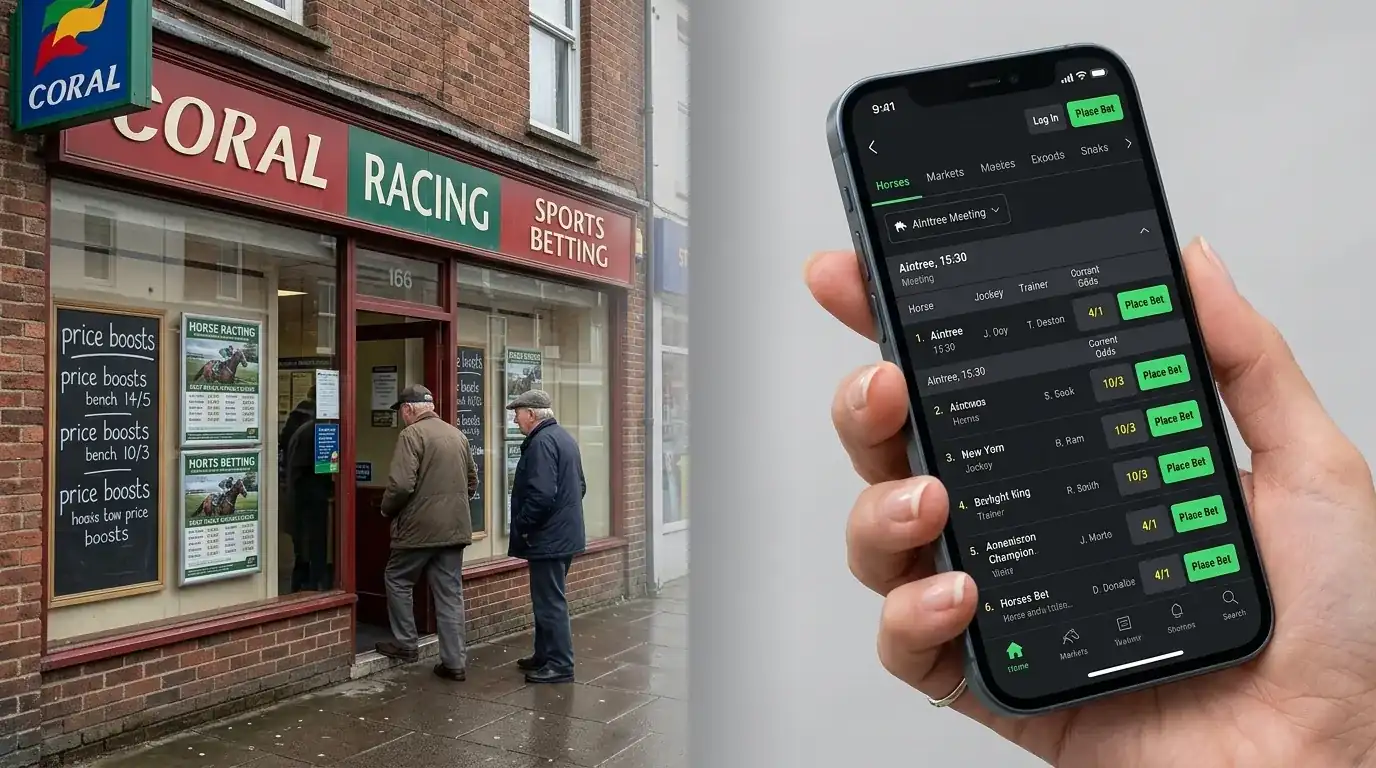
Traditional bookmakers have become aggressive about restricting winning accounts – a practice that doesn’t exist in the same way at crypto platforms. If you’re a successful punter who’s been stake-limited everywhere, crypto represents genuine freedom to bet your opinion at full stakes. The trade-off is accepting reduced protection and contributing nothing back to the sport.
The hybrid approach works for many serious racing punters. They maintain traditional accounts to take advantage of best odds guaranteed offers, early prices, and enhanced places promotions. They use crypto platforms for ante-post betting without account restrictions, large-stake wagers that would trigger reviews elsewhere, and the speed to react quickly when opportunities arise. This isn’t hedging against either system – it’s deploying each where it performs best.
One area where traditional bookmakers retain clear advantages: protest and dead-heat rules. UK bookmakers follow standardised rules set by the betting industry that have been refined over decades. Crypto platforms sometimes have terms that differ in edge cases – worth reading carefully before placing bets in races where the result might involve steward enquiries or close finishes.
Major UK Racing Events for Crypto Bettors
The calendar shapes everything in racing, and understanding which events play to crypto’s strengths helps you deploy your bankroll effectively. Racecourse attendance hit 5.031 million in 2025 – the first time above 5 million since 2019. That recovery matters because on-course crowds drive media coverage, which drives betting interest, which ultimately supports the sport. But the pattern isn’t uniform. The British Horseracing Authority notes that “many of our biggest days continue to grow in popularity, while more ordinary meetings are under more pressure despite the best efforts of host racecourses.”
Premier fixtures saw average attendance rise 5.3% – an additional 697 people per meeting. Core fixtures grew 4.4%, adding 107 on average. The major festivals dominate crypto betting calendars just as they dominate traditional betting, but the format advantages of crypto suit festival betting particularly well.
The Cheltenham Festival in March represents the pinnacle of jump racing and generates more betting volume than any other four days on the racing calendar. Twenty-eight championship races across four days, each attracting ante-post markets months in advance. Crypto’s strength for Cheltenham Festival betting lies in the ante-post flexibility – you can back selections early, withdraw profits from other bets to fund them, and avoid tying up capital in traditional bookmaker accounts that might restrict your action if you’re having a successful run.
The Grand National meeting at Aintree in April draws the largest audience of casual punters alongside seasoned racing enthusiasts. The race itself, with its 40-runner field and marathon distance, suits each-way crypto betting. Long-priced runners that would struggle to get taken on by traditional bookmakers at full stakes find accepting platforms in the crypto space.
Typical Grand National Ante-Post Market
Selected runners might be priced at 25/1, 33/1, 40/1 and beyond months before the race. Each-way terms typically 1/4 odds, places 1-2-3-4-5-6 given the field size. A £50 each-way stake on a 40/1 shot placing fifth returns £550 on the place portion alone – the kind of return that would face scrutiny at stake-limited traditional accounts but processes smoothly through crypto platforms.
Royal Ascot in June brings the flat racing season to its peak, with Group races that attract the best horses from across Europe. The crypto betting dynamic here differs from the jump festivals – Royal Ascot typically sees sharper money and more liquidity, meaning price discrepancies between crypto and traditional bookmakers narrow. The advantage shifts toward the speed of withdrawals and the absence of affordability checks that might otherwise interrupt a successful week.

Beyond the headline festivals, the sustained action throughout the British racing calendar suits crypto’s always-on nature. Meetings run six days a week across multiple courses, providing continuous opportunities. For punters who treat racing as an ongoing activity rather than occasional entertainment, the operational efficiency of crypto compounds over time – hundreds of faster withdrawals, freedom from account reviews, and the flexibility to move funds where they’re needed.
Betting Strategies That Work with Crypto
The fundamental strategies for profitable racing betting don’t change because you’re using cryptocurrency. Form analysis still matters. Value identification still drives long-term profitability. Discipline with staking still separates winning punters from losing ones. What crypto does change is the operational context in which you execute those strategies – and that creates some specific opportunities worth understanding.
Bankroll management takes on particular importance when your balance can move independently of your betting results. The traditional guidance of never risking more than 1–5% of your bankroll on a single bet becomes more critical when that bankroll’s base value can shift. I recommend setting your limits in fiat terms mentally, even if your balance displays in crypto. Decide you’re risking £20 on a bet, then calculate the crypto equivalent – not the reverse.
Dutch betting – spreading stakes across multiple selections to guarantee profit if any of them wins – suits crypto platforms well because they’re less likely to restrict accounts showing patterns of sophisticated betting. Traditional bookmakers have algorithms that identify Dutch betting behaviour and can limit your stakes accordingly. Crypto operators, with less sophisticated risk management and higher tolerance for action, often accept the same bets without friction.
Pro Tip: Price discrepancies between crypto and traditional bookmakers create arbitrage opportunities, but execution risk is real. By the time a Bitcoin deposit confirms, prices can move. Litecoin or stablecoins are better choices when speed matters for cross-platform strategies.
Ante-post betting rewards punters who can identify value early and have the patience to wait. Crypto amplifies this because your capital isn’t locked away earning nothing while you wait for the race. You can stake ante-post positions, withdraw remaining funds to your wallet, use them elsewhere, and only need the account funded again if you want to add to positions or bet the day itself. Traditional bookmakers hold your money the entire time.
The each-way value strategy involves identifying races where the place terms offer disproportionate value – typically large-field handicaps where 1/4 odds and extended places mean your place bet is actually better value than the win bet on certain longer-priced runners. Crypto platforms sometimes offer enhanced each-way terms as promotions, and the absence of stake restrictions means you can fully exploit these when they appear.
For a comprehensive treatment of strategies optimised for crypto betting, including worked examples and specific tactical recommendations, I’ve developed our complete crypto betting strategies guide.
The Future of Crypto Horse Racing Betting
Predictions in this space tend toward either breathless hype or dismissive scepticism, neither particularly useful for actual punters. What I can offer is pattern recognition from nine years of watching this market evolve. Certain trajectories seem clear enough to plan around; others remain genuinely uncertain.
Mobile dominance is the clearest trend. Projections suggest mobile betting will account for 80% of all crypto gambling activity by year’s end. For racing punters, this shapes which platforms deserve attention – those with responsive mobile experiences will capture activity, while desktop-focused operators will fade. The on-course betting opportunity, where you’re standing in the parade ring assessing horses on your phone, favours mobile-native platforms with fast-loading interfaces and reliable deposit processing.
VR casinos and betting experiences are projected to capture 20% of crypto gambling stakes by the end of 2026. While that might seem disconnected from traditional racing, the implication is that platforms investing heavily in VR are diverting resources from conventional sportsbook development.
Mike Peplow, COO of payment processor Paysecure, summarised 2025 as “another year of growth for the iGaming sector. But unlike previous years, it was defined not so much by organic expansion on mature markets, but by the opening of new jurisdictions and technological advances.” That assessment applies directly to crypto racing betting – growth is coming from new participants rather than existing punters increasing activity.
The regulatory trajectory remains the wild card. The UK Gambling Commission is clearly aware of crypto betting and concerned about it. Whether that concern translates into action – and what form that action might take – is unclear. Possible scenarios range from licensing frameworks that bring crypto operators into the regulated fold, to more aggressive enforcement that pressures payment providers and makes accessing offshore platforms more difficult.
What I’m confident about: the operational advantages of blockchain for betting transactions aren’t going away. Faster settlement, lower fees, and greater user control over funds represent genuine improvements over legacy payment infrastructure. Whether those advantages get delivered through the current generation of crypto sportsbooks, through traditional bookmakers adopting crypto payments, or through some hybrid model that doesn’t exist yet, the direction is set. The punters who understand this infrastructure now will be better positioned however the regulatory pieces fall.
Frequently Asked Questions
Is cryptocurrency horse racing betting legal in the UK?
Using offshore crypto sportsbooks is not illegal for UK residents. The Gambling Act 2005 doesn’t criminalise individuals for using unlicensed betting sites – the legal exposure falls on operators who target UK customers without proper licensing. That said, no crypto-only sportsbook holds a UK Gambling Commission licence, so you’ll be betting with operators outside British jurisdiction. This means reduced consumer protections and no recourse through UK regulatory channels if disputes arise. You’re not breaking the law, but you’re stepping outside the protection framework designed for British punters.
What cryptocurrencies can I use to bet on horse racing?
Most crypto sportsbooks with racing coverage accept Bitcoin, Ethereum, Litecoin, and stablecoins like USDT. Bitcoin remains the most widely supported, though its 10–40 minute confirmation times make it slower than alternatives. Litecoin offers roughly 2.5-minute confirmations and minimal fees – ideal when speed matters. USDT and other stablecoins are increasingly popular because they maintain consistent value relative to traditional currency, eliminating the volatility risk that can erode winnings. Some platforms also accept DOGE, Bitcoin Cash, and various other altcoins, though coverage varies by operator.
How fast are crypto withdrawals from horse racing betting sites?
Once a crypto sportsbook processes your withdrawal request, the funds typically arrive in your wallet within the network confirmation time for your chosen cryptocurrency – 10–40 minutes for Bitcoin, around 2.5 minutes for Litecoin, and under 5 minutes for USDT on faster networks. The variable is how long the platform takes to approve the withdrawal internally. Reputable operators process withdrawals within hours; some process automatically with minimal delay. This compares favourably to traditional bookmakers, where withdrawals typically take 1–5 business days to reach your bank account.
Do crypto sportsbooks offer better odds on horse racing?
Not systematically, but opportunities exist. Crypto platforms often operate with smaller margins because they have lower overhead and don’t pay UK licensing costs or levy contributions. However, they typically have less sophisticated trading operations than established UK bookmakers, meaning odds can be either better or worse depending on the specific race and market. The practical approach is comparing prices before betting – some crypto platforms consistently offer value on certain race types while trailing on others. The absence of stake restrictions for winning punters can effectively improve your odds by allowing you to bet your full intended stake at the displayed price.
What are the risks of betting on horses with Bitcoin?
Three main risks: platform reliability, price volatility, and regulatory uncertainty. Platform risk means you’re trusting an offshore operator with your funds – choose established platforms with proven payout histories. Volatility risk means your bankroll value can change independent of your betting results; a winning week can become a losing one if Bitcoin drops significantly before you convert to fiat. You can mitigate this by using stablecoins instead. Regulatory risk is the possibility that future rule changes make accessing these platforms more difficult or create tax complications. Additionally, you lose consumer protections available with UK-licensed bookmakers, including dispute resolution through the Gambling Commission.
Can I bet anonymously on horse racing with crypto?
Many crypto sportsbooks operate with minimal identity verification, allowing you to deposit, bet, and withdraw without providing identification documents. This changes if you trigger withdrawal thresholds or security reviews – most platforms eventually require some verification for larger amounts. Complete anonymity is more complicated than it appears: your cryptocurrency transactions exist on public blockchains, and converting significant winnings to fiat currency typically requires identity verification through exchanges. The practical advantage is privacy from banks and employers rather than true anonymity – your betting activity won’t appear on bank statements even if it’s not entirely untraceable.
Which major horse racing events accept crypto bets?
Established crypto sportsbooks with racing coverage offer markets on all major UK and Irish events: the Cheltenham Festival, Grand National meeting at Aintree, Royal Ascot, the Derby at Epsom, Glorious Goodwood, York’s Ebor Festival, and the November Handicap meeting. Beyond headline fixtures, comprehensive platforms cover every daily meeting from the British and Irish racing calendars plus major international racing including the Prix de l’Arc de Triomphe, Breeders’ Cup, and Dubai World Cup meeting. Ante-post markets for major events typically open months in advance, and the best platforms offer the full range of exotic bets including forecasts and tricasts alongside standard win and each-way options.
Created by the ”Horse Racing Betting Crypto” editorial team.